
HK Lung Cancer Screening: LDCT vs. X-Ray & Free Schemes
AI Summary
● Lung cancer screening helps detect early-stage lung cancer before symptoms appear. In Hong Kong, lung cancer is the leading cause of cancer-related deaths, and over half of cases are diagnosed at Stage 3 or 4.
● Screening is recommended for high-risk groups, including people aged 50 or above, long-term smokers or recent quitters, people exposed to radon, those with cancer or lung cancer family history, and patients with COPD or pulmonary fibrosis.
● Low dose CT lung cancer screening (LDCT) is the main evidence-based tool for high-risk individuals. It can detect small lung nodules more effectively than Chest X-ray, with lower radiation than a standard chest CT.
● Hong Kong has not launched a city-wide free screening program, but the ongoing “看透肺事” scheme offers free LDCT for eligible high-risk individuals.
In Hong Kong, lung cancer is the leading cause of cancer deaths because it is often diagnosed too late. For high-risk individuals, a proactive lung cancer check up is a life-saving necessity. While the thumb test for lung cancer is a simple self-check, it cannot replace professional diagnostics. Unlike a traditional Chest x-ray for lung cancer screening, which may miss small tumors, low dose CT lung cancer screening (LDCT) is the gold standard for early detection. LDCT provides clear imagery with minimal radiation, helping to increase five-year survival rates to over 80%. Prioritizing regular lung cancer screening and securing critical illness insurance offers the best path toward both physical health and financial security.
What is lung cancer screening and why is it so vital?
Lung cancer screening involves using specific medical examinations to look for signs of early-stage lung cancer in individuals who haven't yet shown any respiratory symptoms, such as a persistent cough or coughing up blood. The primary goal is "early detection, early diagnosis, and early treatment."
In Hong Kong, lung cancer is the leading cause of cancer-related deaths among both men and women. Because the lungs have ample space, early-stage tumors may not necessarily press against nerves or the airway; as a result, more than half of all cases are already at an advanced stage (Stage 3 or 4) by the time they are diagnosed. Research indicates that the five-year survival rate for patients with early-stage (Stage 1) lung cancer can exceed 80%, whereas the survival rate for those in the late stages drops significantly.
Benefits of Lung Cancer Screening Programs
● Higher Survival Rates: Lung cancers detected through screening are usually in their early stages, which often allows for complete removal and a potential cure through surgery.
● Lower Treatment Costs: Early-stage treatment typically focuses on surgery or localized radiotherapy. This is significantly less of a financial burden compared to the long-term targeted therapy or immunotherapy required for advanced-stage cases.
● Peace of Mind: For high-risk individuals—such as long-term smokers or those with a family history of the disease—regular screening offers proactive health monitoring and much-needed reassurance.
Who should consider lung cancer screening?
To stay ahead of lung cancer, if you fall into a high-risk category, it is highly recommended to proactively schedule a regular lung cancer check up, even if you aren't currently experiencing any symptoms. You are generally considered high-risk if any of the following apply to you:
● Age: You are 50 years old or above.
● Smoking History: You have a long-term smoking habit or have quit smoking within the last 15 years.
● Environmental Exposure: You have spent significant time in environments with high levels of radon (a known carcinogen often found in certain building materials).
● Personal and Family History: You have a personal history of cancer or a family history of lung cancer.
● Pre-existing Lung Conditions: You have been diagnosed with Chronic Obstructive Pulmonary Disease (COPD) or pulmonary fibrosis.
Screening Methods, Procedures, and Side Effects
1. Chest x ray for lung cancer screening
● Features: This is a common preliminary imaging test and is relatively affordable.
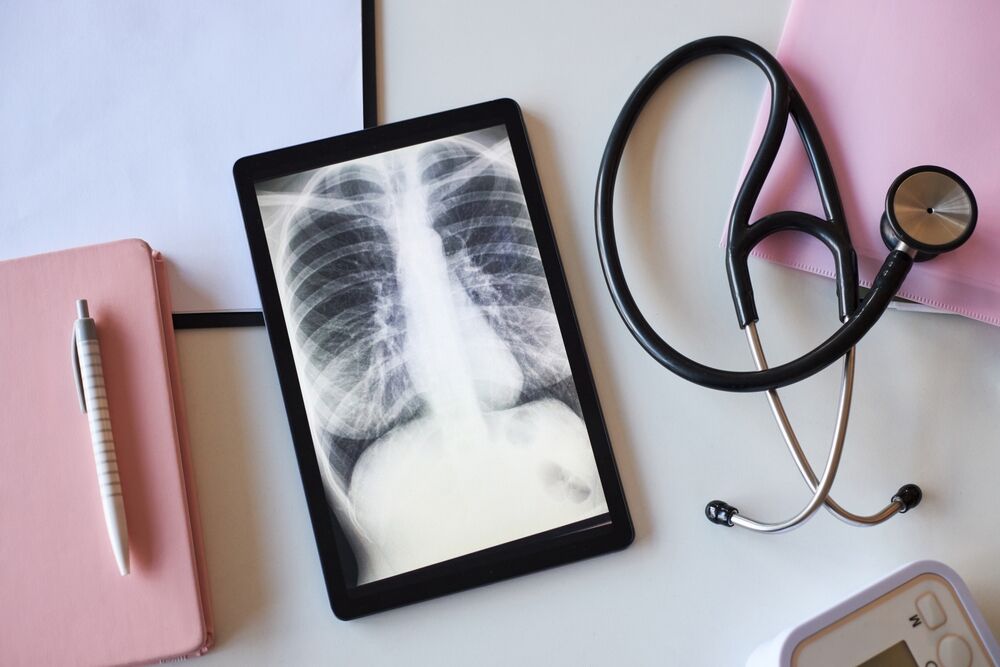
● Limitations: A Chest x ray for lung cancer screening is not recommended as a standalone tool. Compared to low dose CT lung cancer screening, it is much harder for an X-ray to pick up early or tiny lung abnormalities. Furthermore, research hasn't shown that X-ray screenings actually lower the mortality rate among high-risk groups.
2. Low dose CT lung cancer screening (LDCT)
● Definition: This is currently the primary, evidence-based tool used for a lung cancer check up in high-risk individuals.
● The Procedure: You’ll lie flat on a scanning bed, and usually, no contrast dye injection is needed. During the scan, you just need to hold your breath for about 5 to 10 seconds as instructed. The entire process is very quick.
● Pros: It can detect even minute lung nodules and uses significantly less radiation than a standard chest CT—some data suggests up to a 90% reduction in ionizing radiation.
● Side Effects/Limitations: There is still a minor amount of radiation exposure. There is also the possibility of a "false positive," which can cause unnecessary anxiety and may lead to further follow-up tests like additional scans or a biopsy.
3. Lung CT Scan (Computed Tomography)
● Features: A full-dose Lung CT Scan is typically used for further diagnosis and evaluation once an abnormality has been found or if a patient is already showing symptoms. It isn't used as a routine lung cancer screening tool for people who are asymptomatic.
4. Cancer Markers
● Common Markers: These include CEA (Carcinoembryonic Antigen) and NSE (Neuron-Specific Enolase).
● Features: These markers are mostly used to help confirm a diagnosis, monitor how well a treatment is working, or check for potential recurrence.
5. Blood Tests
● Beyond the tumor markers mentioned above, some molecular tests—often called "liquid biopsies"—can analyze tumor DNA in the blood. However, authoritative health guidelines still point to low dose CT lung cancer screening as the gold standard for early detection. Liquid biopsies are generally used as a backup or supplementary tool when a traditional tissue biopsy is too risky or not an option.
6. Bronchoscopy
● Features: This involves using a thin tube (bronchoscope) to examine the lungs' airways. It’s useful for identifying tumors or blockages and allows the doctor to take a tissue sample during the procedure.
● Purpose: This is primarily a diagnostic and biopsy tool used after an imaging test shows something suspicious; it is not meant for general lung cancer screening.
Preparing for Your Lung Cancer Check Up
Before undergoing screening (especially LDCT), participants should prepare the following:
● Documentation: Prepare your ID card and any previous chest X-ray or CT reports for the doctor to compare.
● Health Questionnaire: Fill out details regarding your smoking history, occupational background (exposure to chemicals), and family medical history.
● Clothing: Wear loose-fitting clothing without metal buttons or decorations on the day of the exam.
● Pregnancy Status: Although LDCT radiation is low, it is not recommended for pregnant women unless absolutely necessary.
Follow-up and Interpreting Results
Once your screening is complete, your results will typically fall into one of the following categories:
● Normal (Negative): No suspicious nodules were found in the lungs, or only nodules with clearly benign (non-cancerous) features were detected. Usually, the recommendation is to schedule your next low dose CT lung cancer screening in about 12 months.
● Small Nodules Found (Indeterminate): Some lung nodules may be related to past inflammation, infections, or scarring from previous pulmonary fibrosis; they don't necessarily mean you have cancer. If your doctor believes the nodules are likely benign, they will usually suggest a short-term follow-up—such as another LDCT scan in 3 to 6 months—to see if there are any changes in the size or shape of the nodules.
● Suspicious Findings (Positive): If a nodule is large, shows signs of growth, or has suspicious characteristics on the scan, further clinical evaluation is necessary. This may involve a follow-up scan in 3 months, a diagnostic chest CT, a PET/CT scan, a biopsy (tissue sampling), or a referral to a specialist for advanced care.
Are there free lung cancer screening programs available?
While the government has yet to launch a city-wide free screening program, several charitable organizations and medical units offer periodic schemes to support those at higher risk:
H3: 1. "看透肺事" Free Screening Program (Ongoing)
Organizers: Jointly launched by the "Asian Alliance for Cancer Research and Education" and "Breath of Hope."
Program Details: You can complete a simple risk assessment online. If you are identified as being in a high-risk group, you will be eligible for a free low dose CT lung cancer screening (LDCT), helping you take proactive control of your lung health.
Cancer Information Network Charity Foundation "Free Lung Cancer Screening Program" (Closed)
● Program Period: November 2022 to October 2024.
● Details: To raise awareness about prevention and the importance of early diagnosis, this foundation provided free LDCT scans and professional specialist consultations to 100 high-risk individuals with a family history of lung cancer.
● Current Status: All 100 places have been filled, and the program is now concluded.
How much does lung cancer screening cost in Hong Kong?
Hospital/Clinic | Item | Price (HKD) |
Union Hospital | Thoracic CT (Plain & Contrast) | $7,000 |
Tsuen Wan Adventist Hospital | Thoracic CT (Plain & Contrast) | $5,180 - $7,400 |
Hong Kong Sanatorium & Hospital | Chest CT (Scan + Contrast) | $8,970 - $10,760 |
Canossa Hospital | Chest X-ray | $355 - $710 |
Precious Blood Hospital | Low Dose CT Lung Cancer Screening | $2,055 - $3,085 |
How Critical Illness (CI) Insurance Supports Lung Cancer Patients
Screening aims for early detection. However, if a diagnosis occurs, the heavy medical expenses can be a massive burden. This is where Critical Illness insurance steps in:
● Lump-sum Cash Payout: Receive an immediate payout upon diagnosis of covered lung cancer (including carcinoma in situ or late-stage, depending on terms) to fund high-cost targeted therapies ($50,000–$100,000/month) during the "golden period" without needing receipts.
● Income Bridge: Replaces 2–3 years of lost salary, covering mortgages, living expenses, and children's tuition while the patient focuses on recovery.
● Recurrence Support: Modern policies often offer multiple claims, providing a long-term safety net for cancer relapse or metastasis.
● Hidden Cost Coverage: Pays for "non-hospital" needs like TCM, nutritional supplements, and nursing care that traditional medical insurance may not cover.
Recommended Protection: Generali Critical Illness Insurance
Generali Life (Hong Kong) Limited's "LionAlong" Critical Illness Plan offers comprehensive protection, covering 139 illnesses, including 69 major critical illnesses, 69 early-stage or minor illnesses¹, and 1 surgical excision of a benign tumor.
In addition to the first Major Critical Illness Benefit, the Plan also provides you with Multiple Major Critical Illness Benefit for the Cancer, Stroke and Heart Attack up to 4 claims subject to the waiting period2,3. The amount is 100% of the Sum Assured for each claim.
The plan also provides monthly cash support equivalent to 2% of the sum assured during treatment, with a total amount of up to 120% of the sum assured, and an additional 20% of the sum assured for cancer-related surgeries⁴ to support the patient through their recovery. Furthermore, even after a claim for a major critical illness has been made, you can still enjoy a death benefit of 20% of the sum assured, providing you and your family with comprehensive financial protection for the future.
Frequently Asked Questions (FAQ)
Q: Can I perform a self-test at home? (e.g., the thumb test for lung cancer)
A: One early indicator of lung cancer is "finger clubbing." You can check for this using the thumb test for lung cancer: press your index fingernails together; if you don't see a small, diamond-shaped window of light between them, it could be a sign of an abnormality. Keep in mind that while this self-check is a helpful starting point, it isn’t a definitive diagnosis. If you’re worried or notice anything unusual, it’s best to see a doctor for a professional assessment right away.
Q: Which lung cancer screening method is the most accurate?
A: For "early screening," low dose CT lung cancer screening (LDCT) is currently the most accurate and medically recognized method available. However, if the goal is to "confirm a diagnosis," a biopsy is still necessary. This involves taking a tissue sample to identify the specific type of cancer cells and perform detailed analysis to determine the most effective treatment plan.
Remarks
1. claim is allowed for each Early Stage or Minor Illness diagnosed. Up to 2 times of claim can be made for Carcinoma-in-situ and Percutaneous Coronary Intervention, provided that the sum of 2 payments shall not exceed USD50,000 per Insured for all policies under the Plan. For Attention-Deficit Hyperactivity Disorder, Autism and Tourette Syndrome, only 1 out of these 3 illnesses shall be payable under the Policy, subject to USD50,000 per Insured for all 3 illnesses under all Policies of the Plan. For the benefit limit of each Early Stage or Minor Illness, please refer to the “List of Covered Illnesses”.
2. After a Major Critical Illness Benefit is paid, a maximum of 4 claims for Cancer, Stroke and Heart Attack and 1 claim for Alzheimer’s Disease / Irreversible Organic Degenerative Brain Disorders could further be made under Multiple Major Critical Illness Benefit. The claim for Alzheimer’s Disease / Irreversible Organic Degenerative Brain Disorders is only available if the Major Critical Illness Benefit has not been paid for the same illness before.
3. Under Multiple Major Critical Illness Benefit, the coverage for Cancer, Stroke and Heart Attack will cease at age 100 of the Insured; and the coverage for Alzheimer’s Disease / Irreversible Organic Degenerative Brain Disorders will cease at age 85 of the Insured.
4. If the Insured needs to underwent Severe Facial Disfigurement Requiring Reconstruction, Bilateral Total Mastectomy, Permanent Stoma, Permanent Tube Feeding, or Amputation within the 3 years after the first diagnosis of Cancer and before the end of Benefit Term, for which a Major Critical Illness Benefit or Multiple Major Critical Illness Benefit has been paid or is payable for such Cancer, the Plan will pay an extra benefit of Cancer Impact Support Benefit, equivalent to 20% of the Sum Assured.
This product is subject to terms and conditions. The above product information does not contain the full terms of the Policy, which are included in the Policy Provisions. This product can be purchased as a standalone policy without the need to bundle with other types of insurance products. For details on product features, exclusions, risks, and premiums, please refer to the website, product brochure, proposal and policy provisions.
This blog post is provided by the team at Generali Life (Hong Kong) Limited ("Generali Life") and is for reference only. It does not represent the position of Generali Life. Generali Life assumes no responsibility for any loss or damage caused to any person due to the use or misuse of any information or content, or reliance on it. Any content related to Generali Life products in this blog post is for reference and educational purposes only. Customers should refer to the detailed terms and conditions on the relevant product webpage.